


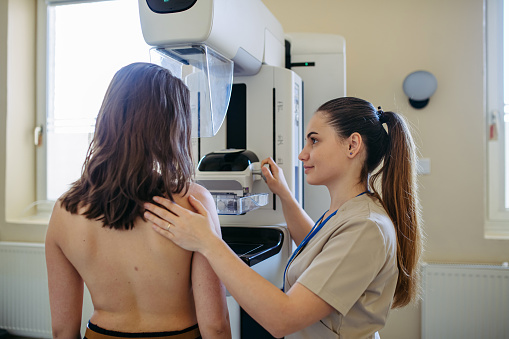
Breast screening uses mammography to detect any small changes1 that could indicate the presence of a cancer. However, to detect such small changes, images must be of a high standard2, which is largely reliant on mammographers utilising precise positioning techniques3 – inadequate positioning has the potential to lead to false negative and false positive outcomes4. Thus, several National Breast Training Centres (NBTCs) are operational across England to provide the necessary specialist mammography training5.
Former NHS Breast Screening Programme (NHSBSP) publications employed the image classification scoring known as ‘PGMI’ (perfect, good, moderate, inadequate) to facilitate the audit of mammographic image quality2. However, PGMI and similar image quality assessments are frequently prone to inter-operator variability and subjectivity, and demonstrate poor reliability6. Therefore, the NHSBSP subsequently removed PGMI from its guidance for mammographers, replacing it with...
Sign in to your account
Log in
This content is available to registered users only. Please sign in to continue.
If you are not yet registered, please create your account on www.sor.org and verify your membership status. Once your account has been set up, return here and sign in to access the content.
Set up your account